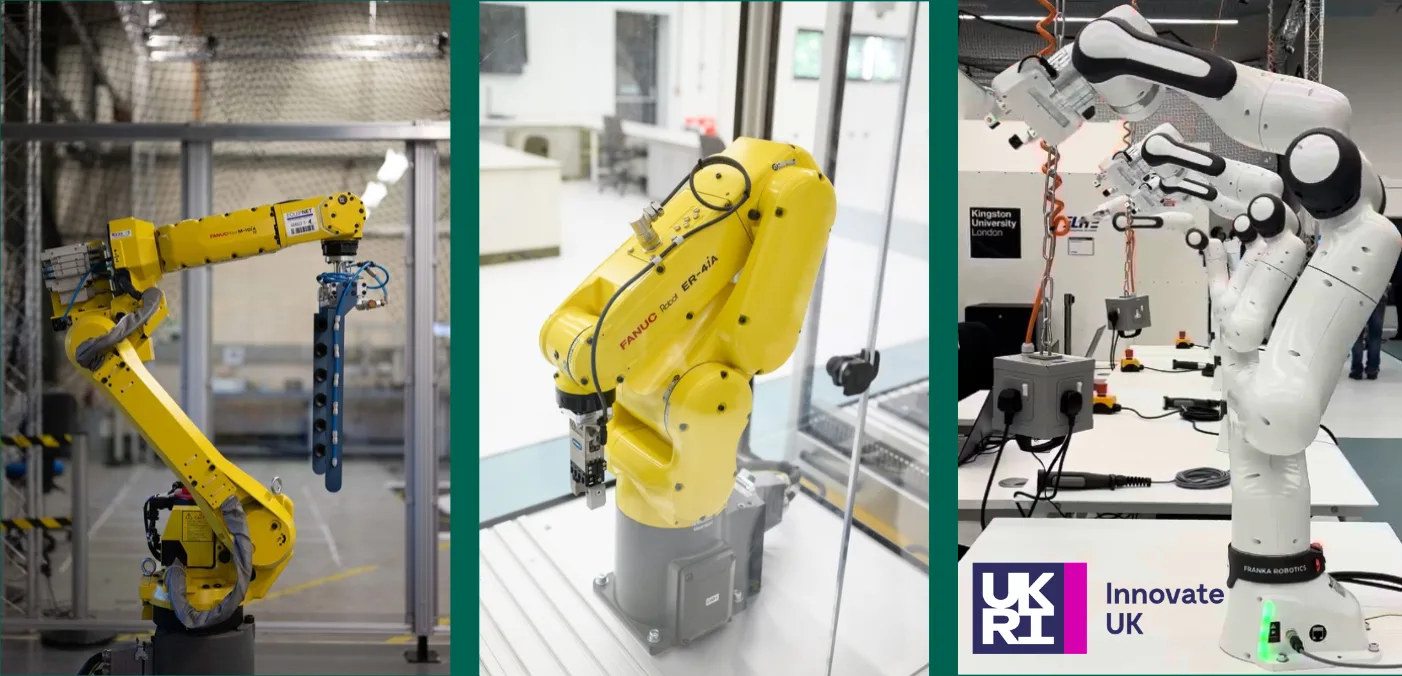

Kingston University will lead a £3.6m national hub testing recycling robots on real waste. Kingston Council says its early support helped win the Innovate UK money.
Kingston University will lead the UK’s first hub for testing recycling robots on real household and commercial waste. The project is worth £3.6 million and is funded by Innovate UK.
The university announced its selection on 9 October. Kingston Council followed on 10 November, saying its own early financial and business support helped the bid.
What the hub is
The project is called the National Waste and Recycling Robotics Adoption Hub, or NORAH. The university says it is one of eight robotics adoption hubs being set up across the UK under a £40 million government scheme.
Of the £3.6 million, £1.5 million goes to Kingston University. Professor Vasilis Argyriou, an expert in computer vision and AI, leads it.
The university gives the reason for it plainly. Fewer than 5% of UK waste facilities use automated sorting. Robots struggle with real waste, which is dirty, mixed and squashed out of shape, so operators cannot predict how a machine will perform or whether it will pay for itself.
The hub will test robots on live waste streams and publish measured results. It will start with the hardest materials:
- textiles
- mixed recyclables
- soft materials that deform as they are handled
What it will offer
According to the university, the hub’s services include:
- test beds using contaminated, mixed waste
- independent benchmarking on an operator’s own waste, rather than figures supplied by the robot maker
- help fitting robots into existing recycling plants
- training for staff who work alongside the machines
- direct links to waste operators and councils for live trials
The consortium includes the University of Kent and the West London Waste Authority, along with robot developers, waste firms, councils and national bodies. The aim is to support more than 150 organisations and have robots working in real plants by 2030.
How a Kingston start-up got it going
The council says the idea came out of the Kingston Green Business Community, which put Kingston University in touch with a local start-up, KAPDAA.
Councillor Nicola Nardelli, the council’s lead member for waste and recycling, said the hub “will not only put Kingston at the centre of green-tech innovation, but will also help build a cleaner, more sustainable future for communities across the country while reducing waste management costs of local authorities.”
Professor Argyriou said it “will help UK recyclers move proven robotics from the lab into live operations, keeping valuable materials out of landfill, cutting carbon emissions, creating skilled jobs and accelerating the circular economy.”
What it means for you
Nothing changes to your bins. Neither announcement says where the robots will be tested, and neither mentions a trial on Kingston’s own collections. The university describes the hub only as based in the south east of England.
The longer-term point is cost. The council says the hub should help reduce what local authorities spend on managing waste.
The project is also the second recycling scheme with a Kingston business at its centre this autumn. In September the council opened 15 drop-off points for old phones, laptops and small electricals, run by Kingston-based Relove Technology.
Have your say