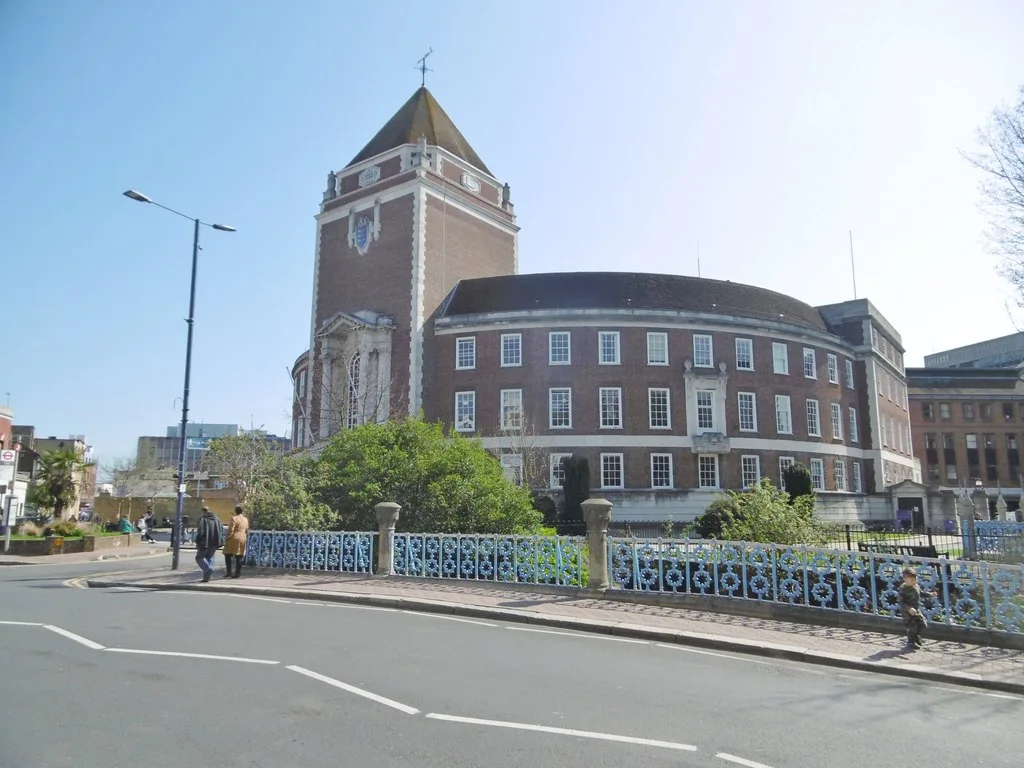

From 31 October the five-objections rule that sends a Kingston planning application to a local committee is abolished, along with councillor call-in.
Kingston’s four neighbourhood committees will lose the power to decide planning applications on 31 October. So will the rule that has let five objections from residents pull an application out of the officers’ hands and into a public meeting.
Both changes are forced on the council by the Town and Country Planning (Discharge of Local Planning Authority Functions) (England) Regulations 2026, made on 1 June and in force on 31 October. The council has to rewrite its constitution to match. That rewrite goes to the Corporate and Resources Committee on Thursday 24 September and to Full Council on 13 October.
The council announced the change on 18 September and described the effect on the Planning Committee as “largely in line with the council’s current decision making”. That is true, and the committee report backs it up with numbers. The effect on the neighbourhood committees is a different matter, and the report says so plainly: the impact there “is clearly more significant”.
What the numbers actually show
The report to the 24 September committee, written by the council’s corporate heads of democratic services and development management, sets out six quarters of decisions:
- 1,756 applications were decided between April 2025 and June 2026
- 1,734 of them, or 98.75%, were already decided by officers under delegation
- in the quarter to 31 March 2026, the figure was 100%
Against that, the borough-wide Planning Committee heard 12 applications in the past municipal year. The report finds all 12 would fall under schedule 2 of the regulations, so all 12 could still have gone to committee if they passed the new gateway test.
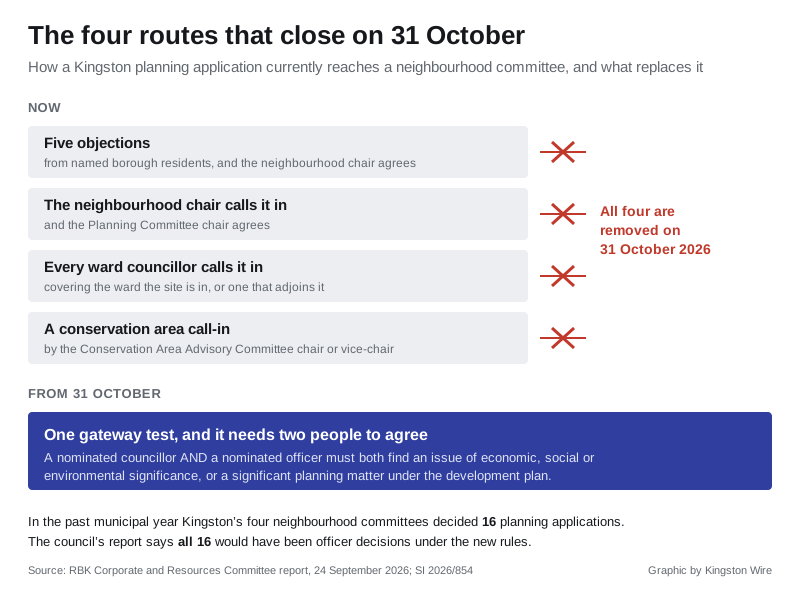
The neighbourhood committees heard 16. The report finds that all 16 would fall under schedule 1, which means every one of them would have been an officer decision with no public hearing at all.
That is the change, stated in the council’s own analysis. Sixteen applications a year is not many. It is the sixteen that residents turned up to.
The four routes that close
Kingston’s constitution currently gives four ways for an application to reach a neighbourhood committee. All four go on 31 October:
- five objections to the application, from named people living or trading in the borough, where the neighbourhood chair and the planning director agree it should be heard
- a call-in by the neighbourhood committee chair, agreed by the Planning Committee chair
- a call-in by every councillor of the ward the site sits in, or a ward that adjoins it
- a call-in by the Conservation Area Advisory Committee chair or vice-chair, for a site in a conservation area
The report is blunt about the last three. “One of the major changes within the Regulations is to remove the ability for individual applications to be called in to committee for decision. This will not be permissible under the Regulations.”
What replaces them
One gateway test, and it takes two people to open it. An application can only go to the Planning Committee if a nominated councillor and a nominated officer, or their authorised substitutes, both agree that it raises either:
- one or more issues of economic, social or environmental significance to the local area, or
- one or more significant planning matters under the development plan and other material considerations
The report’s guidance on applying the test points at cases where officers have identified significant harm, or where a scheme departs from the development plan and officers are still recommending approval.
Ward councillors keep a documented right to make representations to officers, and the report says those representations must be weighed when the gateway test is applied. What they no longer have is the power to force the question.
The five-objections rule, and what it was already worth
The five-objections trigger is the one most residents will have used, and it is worth understanding how it currently works before it goes, because it was never a simple count of five people.
Under the constitution as it stands:
- several objections from one property count as a single objection
- a pro-forma letter circulated for people to sign is treated collectively as a petition, not as separate objections
- a petition counts as one objection
- an objection stops counting towards the five if the planning director, with the relevant chair, decides it has been overcome by a change to the scheme, a condition or a planning obligation
The council reports quarterly to each neighbourhood committee on how often that last provision has been used. After 31 October there will be no threshold for it to feed, and no neighbourhood committee planning agenda to report to.
What it means for you
Your right to comment on a planning application does not change. Every application will still be publicised, you can still object, and officers still have to consider what you say. The council makes that point in its announcement and it is correct.
What changes is what an objection can lead to. Until 31 October, five qualifying objections can put an application in front of local councillors in a public meeting. After it, no number of objections can, unless a nominated councillor and a nominated officer both decide the application clears the gateway test.
If you want to be heard at the borough Planning Committee, the mechanics are now the thing to know:
- you can only register to speak if you responded to the consultation or publicity on the application
- you must register with Democratic Services two working days before the meeting. For a Wednesday meeting, that is 10am on the Monday
- speaking is five minutes per slot, shared between however many objectors want it. Objectors agree a spokesperson or a split between themselves
- if an item is on the agenda only because of objections and nobody registers to speak, it comes off the agenda and goes back to officers to decide
One thing does get better. The revised planning protocol gives the chair or vice-chair of the neighbourhood committee covering the site, and the chair or vice-chair of an adjoining neighbourhood, dedicated speaking slots at Planning Committee, in place of the present general right for any councillor to speak. Whether that is a fair trade for the local committee’s decision-making is a judgement the borough’s councillors will make on 13 October.
Our Kingston planning news page tracks applications in the borough, and the register itself is at publicaccess.kingston.gov.uk. Note that the register has planned maintenance on 22 September, 6am to 2pm, with commenting disabled.
Why the council says it has no choice
The report warns that a council which keeps deciding applications at committee when the regulations require an officer decision leaves those decisions “subject to judicial review and the quashing of the decision”. That language comes from the government’s own guidance, published alongside the regulations on 1 June.
Officers set out a second option, accepting only some of the amendments or making substantive changes. They do not recommend it, and explain why: the room to redraft is “limited to a significant degree by a need to ensure compliance with the Planning Regulations”. There is scope to refine the gateway test, but the report cautions against wording that adds administrative burden and slows determinations.
Officers say they engaged with all political groups during July 2026 and incorporated their views as far as possible. The relevant council web pages have already been rewritten and are waiting for approval to publish.
What happens next
- Thursday 24 September, 7.30pm: Corporate and Resources Committee considers the constitutional amendments and is asked to recommend them to Full Council. Agenda and reports pack
- Tuesday 13 October: Full Council takes the final decision on the constitution
- Saturday 31 October: the regulations take effect, whatever the council has or has not adopted
The relevant portfolio holder is Councillor Andrew Wooldridge, whose brief covers leisure, economic development and planning policy.
We will report what Full Council decides on 13 October, and whether the gateway test is amended before it is adopted.
Sources
- The Town and Country Planning (Discharge of Local Planning Authority Functions) (England) Regulations 2026, SI 2026 No. 854, for the regulations themselves and the 31 October commencement.
- Constitutional amendments report, Corporate and Resources Committee, 24 September 2026, by Michelle Beaumont, Corporate Head of Democratic Services and Elections, and Jon Berry, Corporate Head of Development Management, for the 98.75% delegation figure and its quarterly breakdown, the 12 Planning Committee and 16 neighbourhood committee applications, the schedule 1 and schedule 2 analysis, the gateway test wording, the removal of call-in, the judicial review warning, the options appraisal and the July engagement with political groups. Appendix B carries the current neighbourhood committee planning triggers and the objection counting rules; Appendix C carries the revised public speaking rules and registration deadlines.
- National changes to decision making on planning applications, Royal Borough of Kingston upon Thames, 18 September 2026, for the council’s own account of the change and the committee dates.
- Committee membership and titles for the Kingston and North Kingston, New and Old Malden, South of the Borough and Surbiton Neighbourhood Committees, from the council’s committee pages.
This article was written from the published committee papers. The Corporate and Resources Committee had not met when it was published, and Full Council has not voted. We will update it when it does.
Have your say